

National Crime Victims’ Rights Week
National Crime Victims’ Rights Week (NCVRW) is from April 6 through April 12, 2025. This is the time to recognize and honor the victims and survivors of crime, along with the people who offer critical services for the same.
In September of 2024, the Department of Justice’s Office of Justice Programs published information from the National Crime Victimization Survey (NCVS), which showed that in 2023 nonfatal violent victimization was 22.5 victimizations per 1,000 persons ages 12 or older.
This year, the Office of Victims of Crime (OVC) is implementing the KINSHIP initiative for advocacy and services interface with a heling goal. The OVC has also issued a NCVRW Resource Guide. The National Institute of Correction (NIC) observes the NCVRW through its continuous work that includes training and commitment to the victims of crime. The NIC gives value to victims’ rights and offenders’ accountability.
Brief History and Legal Milestones
For centuries, society did not identify and characterize the harm inflicted by criminal actors and the laws reflected the lack of consideration towards the people affected by the phenomenon. The focus was on the perpetrator of the crime under the common belief that simply punishing the offender would somehow positively affect the victims’ healing process. “The forgotten [persons] of the system” was finally applied to victims per the 1970s Crime Victims’ Rights Movement. Over the course of the years, advancements have been made in the legal and legislative arenas.
To name a few:
- The 1980 Crime Victims’ Bill of Rights in Wisconsin
- Payne v. Tennessee, 501 U.S. 808 (1991)
- The Violence Against Women Act of 2000
- 18 U.S.C. § 3771 Crime Victims’ Rights Act (CVRA) of 2004
- H.R. 9444 - Courtney Wild Crime Victims’ Rights Reform Act of 2022
- In progress, in 2025: H.R. 909 - Crime Victims Fund Stabilization Act.
An important tool to search for victims' rights legal provisions at the federal, state, and territorial level is VictimLaw.

The Clinical Aspect
Victimology is considered a subfield of criminology. From a clinical psychological standpoint, the field of victimology is involved with studying the traumas the victims have experienced. Under general victimology, a broader approach is devoted to various negative circumstances victims have encountered, whereas penal victimology considers the legal framework and angle to assess the victims’ ordeals.
Poly-victimization refers to multiple forms of victimization opportunities. Victims of crime undergo psychological harm by reliving the dramatic details of their experience, whether in the clinical setting or during legal proceedings. Furthermore, plea bargain cases may prevent victims from being adequately heard. Rescheduling trials and conflicting schedules may also expose victims to additional stress and delay the healing process. A potential setback is due to an impediment for the victims in regaining control over the events connected to the initial trauma. Additionally, some may be reluctant to share personal information and the details of the incident when in fear that the very information could one day be used against the victims’ interests or safety.
It is also crucial to recognize the distinction between the impact of a crime and the effects. Impact refers to the “perceived intensity of the effects plus their duration from a victim’s (subjective) viewpoint.” This is an indication that both the effects and the impact may vary depending on individual victims and circumstance. Furthermore, aside from neurological effects, as the result of an overstimulation of the brain-guided defense mechanisms in the prefrontal cortex and hippocampus areas, victims go through a coping mechanism process in an effort to overcome the anguish and protect themselves from future dangers. Under extreme pressure, victims may adopt an emotion-focused approach and discard the problem-solving method. Thus, they end up relying on techniques that provide immediate relief only, without tackling the actual underlying issue.
Some Recommendations
Life skills can be affected by traumatic experiences. Aside from the acquisition of basic skills and new approaches to navigating through various personal and professional areas, victims need help with readjusting to life in society in a post-victimization phase. A victim-oriented approach will include an examination of the victimization history and the identification of gaps in service and/or treatment. A report published in 2017, and available on the OVC site, indicates both the needs and the gaps in services, along with recommendations. Additional attention should be devoted to the establishment of a multidisciplinary team that can be a catalyst for finding the appropriate strategies to teach victims effective coping skills and to help them build resilience through their healing process.
So, why should we honor the victims and survivors of crime? Because it is the right thing to do in a civilized society. Because it is not only important to bring to justice the perpetrators. It is crucial that we continue to support legislation and programs that bring back a sense of safety and set forth a path to healing.
- This article was published on LinkedIn in April 2025.
© 2025 Dr. Rita Pavone | Minerva Translations & Language Services/OnPoint Consulting
VAERS data: More people have suffered brain injury from COVID vaccines than from all other vaccines combined over the past 30 years
The Wuhan coronavirus (COVID-19) ‘vaccine' is linked to an alarming increase in brain injury cases. Data from the VAERS.
Dr. Roger Hodkinson on Heart Damage, Blood Clotting from mRNA Injection
Myocarditis means inflammation of the heart muscle itself and pericarditis means inflammation of the sack surrounding the heart - Dr. Roger Hodkinson
(February 17, 2022)
The Risk of Covid-19 Vaccines
Dr. Vernon Coleman warns of the curernt and future dangers of these 'vaccines'.
(First published on March 14, 2021)
Candace Owens interviews Dr. Stella Immanuel
Dr. Immanueal, along with other doctors, was censored for questioning the media's narrative on Covid-19. (Broadcasted on November 15, 2020)
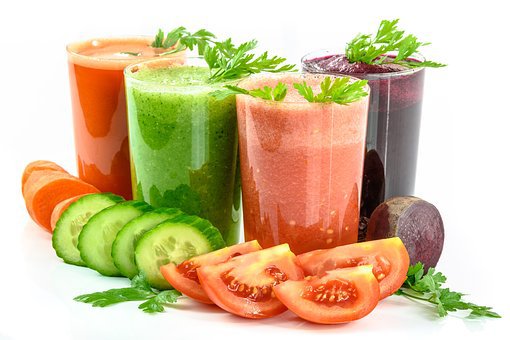
Working Our Way Towards Significantly Decreasing Meat Consumption
September 2019
Revised August 2020

I want to encourage us all to stop being dependent on animal flesh for nutrition or, at least, work on significantly decreasing its consumption.

We keep reading about meat recalls, salmonella and other harmful factors, farm-raised, GMOs, contaminated food from China, torture leading to slow death.
Yet, we continue to display shock at the news.
Why do we continue playing the meat industry’s game at our expense? The meat industry has no compassion towards animals. It gets rich off the flesh and blood of innocent creatures. What makes you think that it would take a strong interest in our wellbeing?
Stand out in the crowd of gullible masses. Honor your body and life. Honor the body and life of animals.
From a health standpoint, a main concern is the link between red meat consumption and heart disease, as discussed by Stanley Hazen, MD, PhD, Vice Chair of Translational Research for the Lerner Research Institute at the Cleveland Clinic in 2014.
Watch this 2018 video. Dr. Heather Fields, an internal medicine specialist at the Mayo Clinic, provides interesting elucidations on epidemiological studies and the issue of correlation with high blood pressure, some types of cancer, diabetes, and cardiovascular disease.
Carnitine, a nutrient found in red meat (also added in some energy drinks), may trigger a series of reactions by microbes residing in the gut area and is metabolized to trimethylamine-N-Oxide (TMAO) – a compound linked to clogged arteries or atherosclerosis. This compound may affect the function of blood cells (platelets), which regulate clotting responses to strokes and heart attacks occurrences. TMAO increases the opportunity for age-related weakened functioning of the blood vessels’ lining (vascular endothelial dysfunction) in healthy humans and laboratory mice.

Iron intake and nitrate/nitrite were the focus of a study by Etemadi et al. (2017) and reported in an article in the British Medical Journal. The participants to the study consumed various types of meat. The investigation aimed at establishing the link between consumption and the probability of an early mortality. The results confirmed a higher incidence of an early death, primarily in association with red meat consumption. White meat consumption appeared not to cause the same conclusions. However, the authors also pointed out that only recently people have become more used to processed white meat and that, for that reason, there would be a need to collect more data on this phenomenon before attempting a determination. There was, however, an increase of the onset of Alzheimer disease in people who ate processed white meat.

Additional attention has been given to the link between (red) meat consumption and the onset of a series of chronic diseases: Colorectal cancer, cardiovascular disease and diabetes. Areas of study include the compounds already present in the meat (such as Heme-Fe or Heme Iron), compounds developed during processing and preparation of the meat, and digestive chemical processes (i.e., TMAO).
Heme Fe is part of a protein attached to an iron atom in a porphyrin ring. Although more research needs to be done to establish the exact link between Heme iron’s activity and the onset or development of chronic diseases, De Smet, Demeyer, and Van Hecke (2018) indicated that its involvement in metabolic processes affects gastric health and the degree of inflammation opportunity. Heme Fe is found in many types of meat, as well as animal-based iron supplements. A high intake amount may be linked directly to cardiovascular diseases, colorectal cancer, and other gastrointestinal conditions.
Insulin-like growth factor (IGF-1) is an anabolic hormone responsible for normal bone and tissue growth and development in young people. In adult age, however, a high level of IGF-1 may disrupt the regular cell division process and lead to the production and metastasis of cancerous cells. The consumption of animal protein appears to increase the levels of this hormone.
© 2020 Dr. Rita Pavone | Minerva Translations & Language Services

It Is Time for Your Organization to Hire an Experienced Cultural Competence Expert
How flawed conceptializations may generate distorted views do diversity, biases, and morals
As companies and organizations pursue better ways for employees to work together and attain high levels of productivity, notions regarding diversity, biases, and morals continue to be expressed and explained under frequently imprudent and partial angles. What might be the underlying problem? Business savvy individuals are not experts in cultural competence and diversity related matters.
Diversity – A flood of limited views continues to proliferate when race, ethnicity and gender are accepted as primary or sole elements of diversity in the ‘inclusion=better talent’ proposition.
In reality, diversity must be considered in its complexity and as a multi-layered structure, encompassing far more than socio-economic factors and indelible personal characteristics. In fact, a substantially inadequate position on diversity and a consequential association with better financial outcomes are elusive.......
è Contact the author to find out more.

Meritocracy – A 9/2018 LinkedIn article does not support the idea of a system that allows people to professionally advance on the basis of their merit. The reasoning given is that individuals ‘at the bottom’ would be prevented from evolving under the ‘viciousness’ of meritocracy. I am afraid the confusion lies in the lack of distinction between meritocracy and aristocracy, with the latter referring to advancement merely based on titles and class.
Source: https://pixabay.com/en/courses-shares-forex-analysis-2318035/
In reality, professional advancement by merit would offer a fairer standard for progress and innovation, since further development is based on hard work and the enhanced value of individual contributions. This is at the foundation of a reasonable and ample path to equal opportunities........
è Contact the author to find out more.
Similar controversial conversations have taken place when discussing equality of opportunities versus social justice, where the former refers to fair access to prospects and the latter relates to equity of distribution based on need. In the end, a discourse on potential disparities in prospects should be undertaken with considerations and analysis of all factors involved in the socio-geographic-economic-political context rather than through the creation of rushed, simplistic generalizations.

Source: https://pixabay.com/en/smiley-emoticon-anger-angry-2979107/
Morals and Ethics - As a language major with linguistics and philology background in my fist post-graduate degree, I had the opportunity and academic obligation to discover that some terms have a similar root but may extend into various meanings. In a 2/2018 Forbes article, opinions on etymology and translation appear to have been blended. Ethos from old Greek has been given the meaning of ‘custom or habit’. The author then assumes that ethics is the translation of ethikos, believed to have the same meaning as ethos. He draws the conclusion that ethics and morality were ‘one a translation of the other.’ To reinforce his argument, he gives the example of asking a person the difference between a term in one language and the equivalent in another one; at the same time, he offers that the meaning of a term can and will definitely change. After reading this tortuous reasoning, I developed a slight headache trying to make sense of it.
In reality, ethos (ἦθος) refers to character and credibility. Thus, the adjective ethikos (ἠθῐκός) relates to character or integrity. Ethics involves a set of guidelines that guides conduct or behavior. The Latin equivalent moralis, is .......
è Contact the author to find out more.
Handling of unconscious biases – Mapping a resolution path to unconscious biases’ influences in the workplace may represent an overreaching argument in support an artificially amplified need of attitude adjustments. Some business experts and coaches believe that unconscious biases should be addressed and can be unlearned. According to their guidelines, a degree of clarity in decision-making can be effectively reached. The Forbes Human Resources Council also appears to have a formula in mind and calls for the identification of unconscious biases and to ‘actively work’ / keep them under control.
In reality, sound logic would challenge the notion of unlearning something which is maintained at an unconscious level. According to Freud’s psychoanalytic theory, the unconscious level of the mind is the storage space of ‘memories, habits, and behaviors.’ These elements cannot be retrieved at will......
è Contact the author to find out more.
Hence, the next time you read a post or an article on diversity, biases, and morals in professional environments, ask yourself how sound the logic and explanations offered are and whether consultation with well-educated and experts in the field should be considered. Plenty of us are qualified, competent, and dedicated professionals. We have the knowledge and tools to help you. All what you have to do is to contact us!
- This article was published on LinkedIn in October 2018.
© 2018 Rita Pavone | Minerva Translations & Language Services
 Print
Print 