
Minerva
Articles and Other Projects
Francis Raymond de Sauvetât and the Toledo School of Translators. NOTA BENE Newsletter 2026
China and United States: Tang Wensheng, Diplomat and Interpreter. NOTA BENE Newsletter 2025

How Low Can You Go?
Seriously, how low of an estimated price are you willing to propose or accept for translation projects?
This is a typical scenario. Can any of you relate?
You are contacted and asked to provide a quote for a large translation project. It takes you time to review and prepare the quote. Then, you may even adjust the quote for a better opportunity to be awarded the project. You submit the quote. Then, no answer or a delayed answer, despite the stated urgency with the request for a quote. Apparently, your quote is appreciated, but another offer was selected.
At some point in your life, you decide to become a translator, a conscientious and qualified translator. You consult with other translators, you research this career, you understand that, whether you may become a part-time or a full-time translator, you will need to get an education, plenty of experience, and follow ethical guidelines.
There are certification exams, various educational avenues, and specializations, among the possibilities. There are, in fact, multiple ways to become qualified for this role. And you continue to pursue the adequate avenues to be better prepared. You take your role seriously.
Then, you come to realize that in many contexts, your qualifications and diligent attitude do not count so much, because the priority of many clients and/or agencies is the lowest possible quote within the shortest time given to complete the job.

There are also agencies and websites that foster a crowdsourcing type of translation bidding for projects. I believe this can be one of the most humiliating experiences for qualified and well-seasoned translators to endure. It reminds me of visiting an open market and yelling a price for merchandise one wants to buy at the lowest price possible. In the case of crowdsourcing for translations, you place a bid with details and hope that your quote will be accepted. Yet, unless you made a close to minimum wage offer, you discover you have waisted your time.
Make no mistake -
This piece is not about convincing you to make your quotes less competitive, if you need to do so. There are also situations which will lead you to decide for a moderate adjustment to estimations, considering the solid professional relationship you have built with some of your clients and agencies. You can also negotiate to maintain a balance between your professional image and the needs of the client/agency.
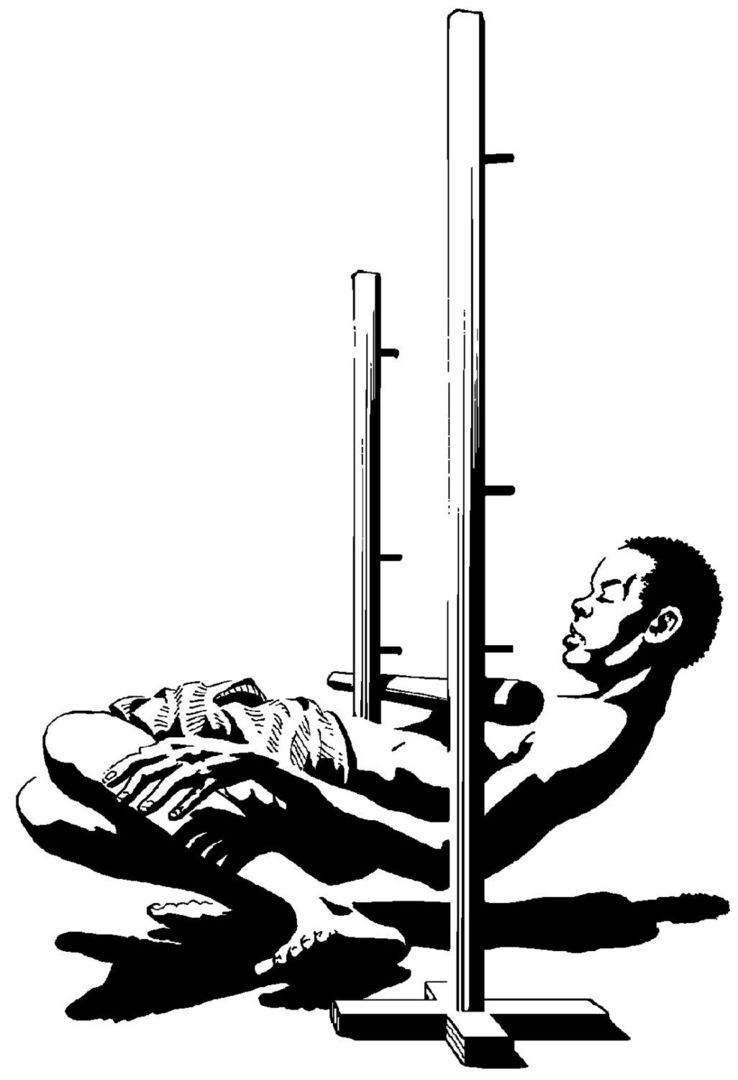
But, HOW LOW CAN YOU GO?
How low should you go to win the bid? How low should you go to arrive first in a race where you are going against unqualified translators, or beginning translators, who will accept any miserly pay?
How do you compare against those pseudo-translators who use machine translation, but lack the training and knowledge that you have so assiduously secured?
The acceptance of low bids - The reality:
High-quality expectations for minimum wage – Whether it is one person’s work, or a group of people who work on portions of a project, a low compensation will be administered, likely below an acceptable rate for similar work in that specific subject matter.
Low rates lead to continued low rates - Low rates lead to having to accept more projects for low compensation in order to earn a living.
Low rates + continued low rates lead to decreased quality – Pursuing low rates means getting trapped in a web of low-bid pursuits with accelerated timelines. This fosters a decrease in the quality of the translated projects, because there is just not enough time to accomplish the task in the appropriate manner.
Low rates + decreased quality lead to diminished professionalism – Chasing projects with the lowest bids causes a decrease in the quality. This takes away from the gratification of a job well done and the realization of the final product as a result of continued professional preparation and commitment.
Azure, ChatGPT, Claude and more AI platforms deserve a separate discussion. At the same time, it is notable to indicate that the use of this advanced technology is already causing some perplexities among translators and interpreters, because it affects the quality of translations and is gradually placing the profession at risk.
Crowdsourcing issues – Despite the convenience of outsourcing work, there are a few, but significant issues with crowdsourcing for translators. (1) The balance is tilted from quality to quantity. (2) It encourages a multitude of amateur trnanslators to participate in a process that would be better handled by professional translators. (3) Problems with inconsistency and accuracy across projects. (4) Unsubstantiated competencies and ethics. (5) It may open the doors for fraud from either side of the equation.
So, “HOW LOW YOU CAN GO” is probably proportional to your own professional image and self-respect, as well as to your willingness to commit to the promotion of excellence in the translation/interpreting profession.
- This article was originally published on LinkedIn in October 2022 and updated here in 2026.
© 2022 and 2026 Dr. Rita Pavone | Minerva Translations & Language Services

Translating Spanish and Italian: Are They The ‘Same’ Languages?
If they were the same, they would be ONE language, maybe ‘Spatalian’?
For the sake of a clarification on this matter, I would like to finally undo this misconception that Spanish and Italian are the same and that no specialized knowledge/training is necessary to be fluent in each one.
Qualified and ethical translators know better than advancing a level of expertise they really do not possess. Qualifications in one language do not mystically morph into another one.
Yet, it is remarkable to see how many certified and/or qualified translators for the Spanish language have suddenly become experts in translations involving the Italian language as well.
But these two languages are not the same. They certainly share the same origin in Latin, such as other romance languages do, primarily French, Portuguese, and Romanian, with subsequent vernacular evolutions in various parts of the world. In fact, the popular use of the Latin language in the Roman Empire (circa 753 BC-565 CE) was later subjected to a diversification process, also due to geographical and political influences across the empire territories and beyond. It is estimated that approximately 23 distinct romance languages exist, but nearly 50 when considering a particular structure and dialect.
- What do romance languages have in common? They share a large pool of terms and some syntax constructs. They also have the subjunctive verb tense.
Yet, each language has evolved in a unique manner.
- How are Spanish and Italian different? Amazingly enough for some people, among the main recognized romance languages, Spanish is actually closer to Portuguese, whereas Italian is closer to French.
While Spanish and Italian share a few words, the grammar, pronunciation, overall vocabulary, and spelling are different.

Moreover, the Italian grammar is more complex and may use two different auxiliary verbs in compound verb structure. The choice may be challenging, because it is based on the verb tense and the regular v. irregular verb arrangement.
Furthermore, there are some distinctions in word starting and endings, possessive adjectives v. articles, use of prepositions, and plurals of words.

- Since Italian is closer to French, does it mean that certified and/or qualified translators for the French language are inevitable experts in translations involving the Italian language as well?
Not so fast.
A lexical similarity of 89% refers to the etymology, that is, the origin of the words. In this case, it means that both languages derive from Latin.
è Contact the author to find out more.
- This article was published on LinkedIn in October 2022.
© 2022 Rita Pavone | OnPoint Research and Consulting

It Is Time for Your Organization to Hire an Experienced Cultural Competence Expert
How flawed conceptializations may generate distorted views do diversity, biases, and morals
As companies and organizations pursue better ways for employees to work together and attain high levels of productivity, notions regarding diversity, biases, and morals continue to be expressed and explained under frequently imprudent and partial angles. What might be the underlying problem? Business savvy individuals are not experts in cultural competence and diversity related matters.
In reality, diversity must be considered in its complexity and as a multi-layered structure, encompassing far more than socio-economic factors and indelible personal characteristics. In fact, a substantially inadequate position on diversity and a consequential association with better financial outcomes are elusive.......
è Contact the author to find out more.

Meritocracy – A 9/2018 LinkedIn article does not support the idea of a system that allows people to professionally advance on the basis of their merit. The reasoning given is that individuals ‘at the bottom’ would be prevented from evolving under the ‘viciousness’ of meritocracy. I am afraid the confusion lies in the lack of distinction between meritocracy and aristocracy, with the latter referring to advancement merely based on titles and class.
In reality, professional advancement by merit would offer a fairer standard for progress and innovation, since further development is based on hard work and the enhanced value of individual contributions. This is at the foundation of a reasonable and ample path to equal opportunities........
è Contact the author to find out more.

Morals and Ethics - As a language major with linguistics and philology background in my fist post-graduate degree, I had the opportunity and academic obligation to discover that some terms have a similar root but may extend into various meanings. In a 2/2018 Forbes article, opinions on etymology and translation appear to have been blended. Ethos from old Greek has been given the meaning of ‘custom or habit’. The author then assumes that ethics is the translation of ethikos, believed to have the same meaning as ethos. He draws the conclusion that ethics and morality were ‘one a translation of the other.’ To reinforce his argument, he gives the example of asking a person the difference between a term in one language and the equivalent in another one; at the same time, he offers that the meaning of a term can and will definitely change. After reading this tortuous reasoning, I developed a slight headache trying to make sense of it.
In reality, ethos (ἦθος) refers to character and credibility. Thus, the adjective ethikos (ἠθῐκός) relates to character or integrity. Ethics involves a set of guidelines that guides conduct or behavior. The Latin equivalent moralis is .......
è Contact the author to find out more.
Handling of unconscious biases – Mapping a resolution path to unconscious biases’ influences in the workplace may represent an overreaching argument in support an artificially amplified need of attitude adjustments. Some business experts and coaches believe that unconscious biases should be addressed and can be unlearned. According to their guidelines, a degree of clarity in decision-making can be effectively reached. The Forbes Human Resources Council also appears to have a formula in mind and calls for the identification of unconscious biases and to ‘actively work’ / keep them under control.
In reality, sound logic would challenge the notion of unlearning something which is maintained at an unconscious level. According to Freud’s psychoanalytic theory, the unconscious level of the mind is the storage space of ‘memories, habits, and behaviors.’ These elements cannot be retrieved at will......
è Contact the author to find out more.
Hence, the next time you read a post or an article on diversity, biases, and morals in professional environments, ask yourself how sound the logic and explanations offered are and whether consultation with well-educated and experts in the field should be considered. Plenty of us are qualified, competent, and dedicated professionals. We have the knowledge and tools to help you. All what you have to do is to contact us!
- This article was published on LinkedIn in October 2018.
© 2018 Rita Pavone | OnPoint Research and Consulting
Current Board Member and Public Relations Chair





 Print
Print 